7 Best Bulk Sack Suppliers for Global Buyers
Choosing the right Bulk Sack supplier can affect product safety, loading speed, freight costs, and customer confidence. Global buyers must look beyond attractive prices. They should examine fabric strength, stitching quality, liner design, filling systems, and tested working loads. A reliable supplier should provide clear technical documents, batch traceability, and consistent communication across time zones.
Packaging consultant Dr. Elena Marquez says, “A bulk bag is only reliable when its design matches the material, handling method, and journey.” Her point is practical. A sack for dry chemicals needs different protection from one used for grain, minerals, or recycled polymers. Buyers should request samples before approving large production. They should also inspect seams, lifting loops, discharge spouts, and moisture barriers. Small details matter.
This guide reviews seven Bulk Sack suppliers serving international buyers. It considers manufacturing experience, quality controls, customization, export support, and response speed. It also looks at how suppliers handle drawings, test reports, packaging instructions, and replacement claims. These checks cannot remove every risk. Supplier websites may sound stronger than their factory systems. That deserves careful reflection.
The best choice is not always the largest company. A smaller manufacturer may offer better technical attention, while a major producer may provide stronger capacity and wider certifications. Buyers should compare evidence, not promises. Confirm specifications in writing. Discuss pallet patterns, container loading, storage conditions, and inspection procedures before signing an order. A dependable partnership begins with precise questions and realistic expectations.
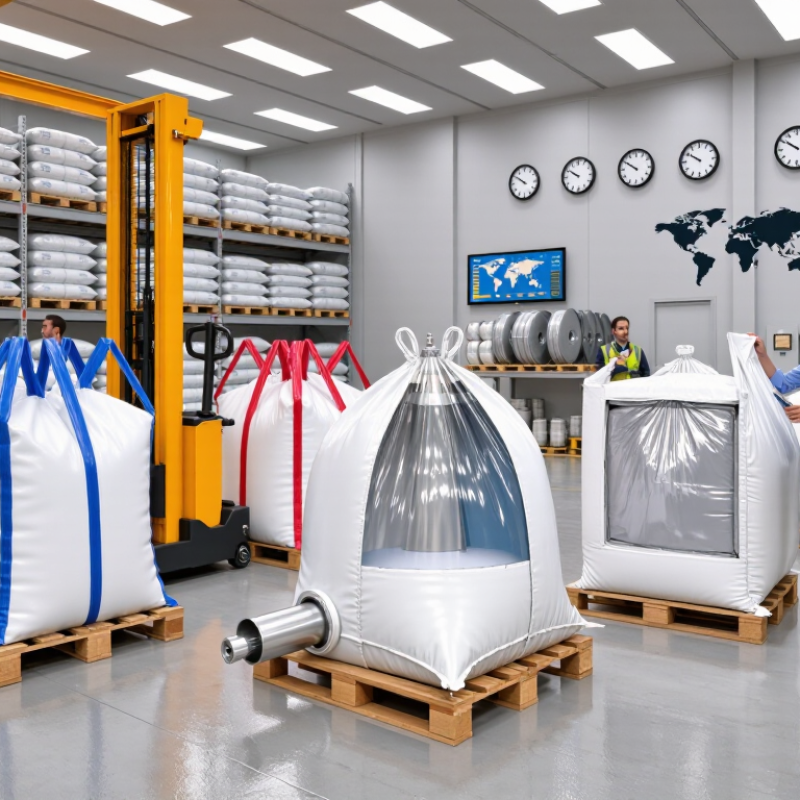
What Bulk Sacks Are and How Global Buyers Use Them
Bulk sacks are large, flexible containers made from woven polypropylene fabric. They are also called FIBCs or big bags. Most hold between 500 and 2,000 kilograms, depending on the design and load rating.
Global buyers use them for grains, powders, minerals, construction materials, and other dry goods. Their square shape saves warehouse space and reduces handling costs. Forklift loops allow safer lifting, while discharge spouts support controlled unloading. A food-grade inner liner can protect sensitive materials from moisture and contamination. However, a liner does not replace proper storage conditions.
Choosing the right sack requires more than checking its capacity. Buyers should confirm fabric strength, lifting safety factor, seam quality, closure type, and filling method. Humid routes may require stronger moisture protection. Outdoor storage can create problems, even with covered pallets. I have seen specifications overlook pallet dimensions and forklift access. That small error delayed unloading and increased labor costs. It is also important to request test documents, production samples, and traceable inspection records. Requirements differ across industries and destination markets, so buyers should verify labeling, packaging, and transport rules before shipment. A cheaper sack can become expensive when dust leaks, lifting loops fail, or the discharge opening does not match the equipment. Specification reviews deserve time.
Key Factors for Evaluating International Bulk Sack Suppliers
Choosing among the seven best bulk sack suppliers requires more than comparing quoted prices. A reliable review should examine fabric strength, seam quality, filling design, discharge control, and test documentation. ISO 21898 provides a useful reference for flexible intermediate bulk containers, especially when products face repeated lifting and storage. Ask for recent batch reports, not only attractive samples.
Logistics capability matters just as much. UNCTAD’s Review of Maritime Transport 2024 reported that global maritime trade reached about 12.3 billion tonnes in 2023. Delays can therefore affect packaging availability across several ports. The World Bank’s 2023 Logistics Performance Index also evaluates 139 economies, highlighting customs, tracking, and delivery reliability. Suppliers should explain production capacity, export experience, container loading methods, and backup plans for material shortages.
Inspect the details closely. Can the supplier provide traceable polypropylene records? Are load tests conducted by an independent laboratory? Do printed labels remain readable after handling? A factory audit, video inspection, or third-party pre-shipment check may reveal weak stitching that photographs hide. Cost still matters, but the lowest quotation can create higher damage and repacking expenses. My own evaluation would not treat every certification as proof of consistent quality; certificates can be current while daily production varies. That uncomfortable gap deserves practical verification.
Seven Leading Bulk Sack Suppliers for Global Buyers
Seven Leading Bulk Sack Suppliers for Global Buyers
Global buyers need bulk sack suppliers that combine capacity, consistency, and practical export support. The strongest suppliers usually offer woven polypropylene sacks, flexible intermediate bulk containers, and custom liners. They should explain fabric weight, safe working load, filling method, and discharge design clearly. Vague specifications create expensive problems later.
Seven leading supplier groups serve different purchasing needs. Industrial manufacturers often provide large production runs and stable pricing. Certified food-grade suppliers focus on clean facilities, traceability, and suitable inner liners. Construction-material specialists offer reinforced seams and dust-resistant closures. Agricultural packaging suppliers may provide breathable designs for dry products. Custom engineering suppliers handle printing, lifting loops, and unusual dimensions. Regional exporters can shorten delivery routes and simplify communication. Smaller technical factories may respond faster to trial orders.
Ask for recent test reports, sample sacks, production photographs, and inspection records. Check whether the stated working load matches your product density and handling equipment. A reliable supplier should discuss moisture exposure, pallet stacking, and container loading without avoiding details. I have seen buyers compare only unit prices, then discover weak loops during warehouse lifting. That mistake is preventable. Still, no supplier is perfect. Samples can perform well while larger batches vary slightly. Independent pre-shipment inspection adds confidence, especially for new trade routes. Keep written approvals, packaging drawings, and loading instructions. Careful records make quality disputes easier to resolve.
7 Best Bulk Sack Suppliers for Global Buyers
FIBC specification benchmark for comparing bulk sack suppliers by commonly available safe working load options.
Common FIBC safe working load levels generally range from 500 kg to 2,000 kg. Actual capacity depends on fabric strength, lifting design, filling method, discharge configuration, and safety factor requirements. These figures represent product specification levels, not supplier market share.
How to Select the Right Supplier for Your Bulk Sack Requirements
7 Best Bulk Sack Suppliers for Global Buyers
Choosing the right bulk sack supplier requires more than comparing prices. A dependable supplier should understand your material, filling method, discharge process, and transport conditions. Ask for technical data, including fabric weight, safe working load, safety factor, seam construction, and liner specifications. Request recent test reports and a production sample before placing a large order. The sample should be checked when empty and filled, because weak seams may appear only under pressure. That detail is easy to overlook.
Tips: Compare suppliers using the same specification sheet. Check factory capacity, quality controls, traceability, and delivery history. Confirm whether the quoted price includes printing, liners, pallets, inspection, and shipping documents. A low quotation may hide extra costs. Ask how complaints are handled, too. Response time reveals practical reliability.
Global shipments also require careful communication. Confirm acceptable tolerances, moisture protection, packaging methods, and labeling requirements before production begins. Suppliers should explain how they control recycled materials, contamination risks, and batch consistency. For regulated or sensitive applications, request suitable compliance documentation from an authorized testing body. Do not rely on verbal promises.
A factory audit can provide useful evidence, but it is not perfect. One successful visit cannot prove every future batch will perform equally. Keep written approvals, inspection records, and agreed samples. I would also allow extra time for the first shipment. Production schedules can slip, especially when specifications change late. The best supplier is not always the cheapest; it is the one that communicates clearly and delivers consistent sacks under real working conditions.

 Cosmetic Packaging
 Display Packaging
 CBD Packaging
 Retail Packaging
 Product Packaging
 Cigarette Packaging
 Candle Packaging
 Soap Packaging
 Chocolate Packaging
 Vape Packaging
 Food Packaging
 Window Packaging Boxes
 Gift Packaging
 Bakery Packaging Boxes
 Pizza Packaging
 Bottle Packaging
 Garments Packaging
 Custom Printed Bags
 Christmas Packaging
 Toy Packaging
 Cereal Packaging
 Jewelry Packaging
 Apparel Packaging
 Shipping Packaging
 Custom Pre Roll Boxes
 Dispenser packaging
 Eco Friendly Packaging
 Custom Health Packaging
 Pharmaceutical Packaging


