What Is ABC Cable and Where Is It Used?
Abc Cable, commonly called Aerial Bundled Cable, is a power distribution cable designed for overhead electrical networks. It combines several insulated conductors into one compact bundle. A supporting messenger may carry the mechanical load. This design creates a cleaner appearance than separate bare wires. It also reduces the space needed on crowded utility poles.
You may see Abc Cable along residential streets, rural roads, construction areas, and small commercial districts. Utilities often choose it for low-voltage distribution near homes and public facilities. Its insulated conductors can reduce accidental contact risks from branches or nearby objects. However, it is not a universal replacement for every overhead system. Voltage level, current demand, pole strength, weather exposure, and local standards still matter.
From a field perspective, the cable looks simple, but installation requires careful planning. Technicians must check sag, tension, connectors, clearances, and termination points. A poorly fitted connection can create heat, faults, or premature damage. Regular inspections remain important after strong winds, heavy snow, or falling branches. The cable may withstand difficult conditions, yet no product is completely maintenance-free. That point is easy to overlook.
This guide explains what Abc Cable is, how it is structured, and where professionals commonly use it. It also considers its practical benefits and limitations. Readers should verify technical details with qualified engineers, manufacturers, and applicable electrical regulations. Product labels alone cannot confirm suitability. Real conditions decide.
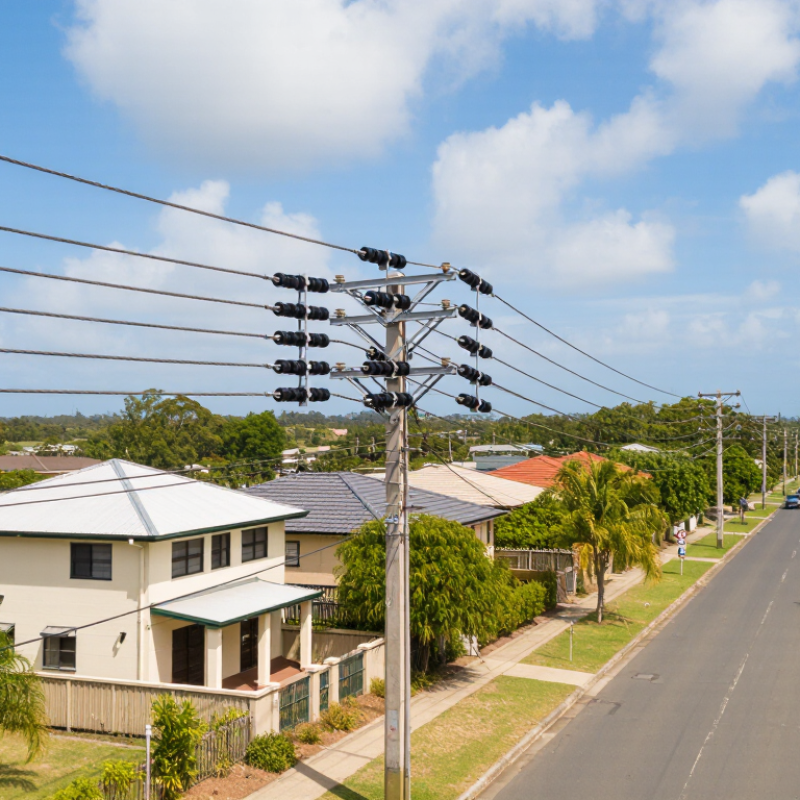
ABC Cable Defined: Aerial Bundled Conductors for Low- and Medium-Voltage Networks
What Is ABC Cable and Where Is It Used?
ABC Cable Defined: Aerial Bundled Conductors for Low- and Medium-Voltage Networks
Aerial bundled cable, or ABC cable, combines several insulated conductors into one compact overhead assembly. In low-voltage networks, it commonly carries electricity from transformers to homes, shops, and street lighting. Medium-voltage versions use thicker insulation and additional shielding requirements. Their ratings depend on national standards, installation methods, and system design. Not every bundled cable suits every network.
On a pole-lined road, ABC cable needs less cross-arm space than separated bare wires. Its insulated surface can reduce accidental contact risks and limit faults caused by branches, birds, or wind-driven debris. It also suits narrow streets where wide conductor spacing is difficult. Crews attach the cable with suspension and anchoring hardware. They must maintain clearances at crossings, entrances, and buildings. Small details matter.
Engineers check voltage drop, current capacity, fault levels, temperature, sag, and mechanical loading. A cable may look tidy but run too hot during an evening peak. Moisture, ultraviolet exposure, salt air, and repeated movement can shorten service life. ABC is not a cure-all. Poor tensioning can damage insulation, while incorrect accessories may create weak points. Some assumptions fail. Regular visual inspections and accurate installation records remain important, even when the line appears uneventful.
Core Design and Ratings: 0.6/1 kV Systems with 16–300 mm² Conductors
ABC cable means aerial bundled cable, designed for low-voltage overhead distribution. Its insulated conductors are twisted into one compact bundle, usually around a neutral messenger. This arrangement reduces crossarm space and limits accidental contact between phases. It is commonly used on residential streets, rural feeders, service connections, and temporary construction supplies.
The 0.6/1 kV rating indicates 0.6 kV between conductor and earth, and 1 kV between conductors. Conductor sizes from 16 to 300 mm² cover small service drops and heavier distribution routes. IEC 60228 defines conductor construction and nominal cross-sectional areas, while IEC 60502-1 addresses insulation and cable performance for rated voltages up to 1 kV. XLPE insulation is widely selected for heat resistance and outdoor durability. Still, the rating alone does not determine safe current capacity. Ambient temperature, span length, installation tension, solar exposure, and voltage drop matter greatly. Field calculations can be less tidy than catalog tables.
The International Energy Agency’s Electricity Grids and Secure Energy Transitions report estimates that over 80 million kilometers of grids must be added or refurbished worldwide by 2040. This strengthens demand for compact overhead systems, especially where underground construction is expensive. In practice, engineers may choose 16, 25, 50, 95, 150, or 300 mm² conductors after checking load growth and fault levels. Bigger is not always better. Oversized cable increases weight, hardware loads, and installation difficulty. A careful design review remains necessary.
What Is ABC Cable and Where Is It Used? - Core Design and Ratings: 0.6/1 kV Systems with 16–300 mm² Conductors
| Design or conductor size | Typical ABC cable details | Rated voltage | Maximum DC conductor resistance at 20°C | Typical use or design note |
| Core arrangement | Usually three insulated phase conductors twisted around a neutral messenger; some designs add a separate street-lighting conductor. The messenger may also serve as the neutral and supporting member. | 0.6/1 kV (U0/U) | Depends on conductor material and cross-sectional area | Used for overhead low-voltage distribution and service connections. The exact core arrangement varies by system and applicable specification. |
| Phase conductor | Typically stranded aluminium, with XLPE insulation intended for outdoor service. | 0.6/1 kV (U0/U) | — | Insulated bundled conductors reduce the likelihood of accidental contact between conductors compared with bare overhead-wire arrangements. |
| Neutral messenger | Commonly stranded aluminium alloy or aluminium, depending on the cable design; may be bare or insulated. | Specified as part of the cable assembly | Depends on the specified messenger conductor | Provides mechanical support and may carry the neutral current. Its electrical and mechanical functions must be confirmed from the cable specification. |
| 16 mm² | Stranded aluminium conductor | 0.6/1 kV | 1.91 Ω/km | Smaller service connections or light-load branches, subject to the network design and local requirements. |
| 25 mm² | Stranded aluminium conductor | 0.6/1 kV | 1.20 Ω/km | Service connections and smaller distribution branches where the calculated load and voltage drop permit. |
| 35 mm² | Stranded aluminium conductor | 0.6/1 kV | 0.868 Ω/km | Low-voltage branch distribution; final suitability depends on load, span, and installation conditions. |
| 50 mm² | Stranded aluminium conductor | 0.6/1 kV | 0.641 Ω/km | Commonly considered for distribution branches with moderate load requirements. |
| 70 mm² | Stranded aluminium conductor | 0.6/1 kV | 0.443 Ω/km | Distribution circuits where a larger conductor is needed to manage load or voltage drop. |
| 95 mm² | Stranded aluminium conductor | 0.6/1 kV | 0.320 Ω/km | Higher-load distribution branches; select using the applicable thermal and mechanical design criteria. |
| 120 mm² | Stranded aluminium conductor | 0.6/1 kV | 0.253 Ω/km | Distribution feeders or heavily loaded sections where the network design calls for a larger cross-section. |
| 150 mm² | Stranded aluminium conductor | 0.6/1 kV | 0.206 Ω/km | Higher-capacity overhead low-voltage distribution, subject to verified loading and support design. |
| 185 mm² | Stranded aluminium conductor | 0.6/1 kV | 0.164 Ω/km | Large distribution conductors used where electrical demand and route conditions justify the size. |
| 240 mm² | Stranded aluminium conductor | 0.6/1 kV | 0.125 Ω/km | Large low-voltage feeder applications; check the complete cable assembly’s mechanical limits. |
| 300 mm² | Stranded aluminium conductor | 0.6/1 kV | 0.100 Ω/km | Large-conductor distribution applications where permitted by the network specification and installation design. |
| Selection note: Resistance figures are maximum DC values at 20°C for stranded aluminium conductors and are provided as reference data. They are not ampacity ratings. Current-carrying capacity, voltage drop, short-circuit performance, span, sag, and support loading depend on the complete cable design, installation conditions, ambient temperature, and governing standards. Confirm values against the specific cable datasheet and local electrical requirements. |
Safety and Performance: Insulated Phases, Reduced Fault Risks, and IEC Compliance
What Is ABC Cable and Where Is It Used?
Safety and Performance: Insulated Phases, Reduced Fault Risks, and IEC Compliance
ABC cable, or aerial bundled cable, combines insulated conductors into one compact overhead assembly. Each phase has its own insulation, unlike traditional bare-wire distribution. This design keeps energized conductors separated during normal operation. It also reduces contact with branches, birds, and nearby structures. That matters in narrow streets and heavily planted neighborhoods. Installers often observe fewer accidental faults after replacing exposed lines. The result is not perfect, though. Damaged insulation still requires immediate inspection.
ABC cable is widely used in residential areas, rural networks, and temporary construction supplies. During field inspections, technicians check sag, clearances, connector condition, and support strength. They also look for cracked insulation caused by sunlight, impact, or poor handling. Reduced fault risk does not remove the need for protective devices. Correct earthing and properly selected fuses remain essential. Small installation mistakes can still create serious heating or outages.
Reliable ABC cable should meet relevant IEC requirements for conductor resistance, insulation quality, voltage rating, and routine testing. Compliance is more than printing a standard number on packaging. The complete installation must match local conditions and engineering specifications. Cable size, weather exposure, load growth, and mechanical tension all deserve careful review. A compliant cable can still perform poorly when installed carelessly. That uncomfortable point is easy to overlook.
Where ABC Cable Is Used: Overhead Distribution, Rural Grids, and Service Drops
What Is ABC Cable and Where Is It Used?
Aerial bundled cable, or ABC cable, combines insulated conductors into one compact overhead assembly. The conductors are twisted together, which reduces the space needed on utility poles. Unlike bare overhead wires, the insulation helps limit accidental contact and certain short circuits. It does not make the system risk-free.
ABC cable is widely used for overhead distribution in towns and expanding residential areas. It can carry electricity along narrow streets where several separate wires would look crowded. Rural grids also benefit from its compact design. Long pole routes can cross fields, roadside corridors, and uneven ground with fewer visible conductors. Service drops are another common use. A bundled cable can connect a pole-mounted line to a home, workshop, or small commercial building. Installers must still check span length, sag, wind exposure, and the required current capacity.
Tips: Inspect the cable jacket for cuts, abrasion, heat marks, or loose fittings. Keep branches away from the route. Never assume insulation makes a damaged cable safe. Qualified electrical crews should handle installation, repairs, and testing. In practice, ABC cable often simplifies pole layouts, but it is not the perfect answer for every network. Heavy loads, difficult terrain, or future expansion may require a different design. A careful site survey prevents expensive changes later.
Installation Factors: Span Length, Current Capacity, Weather Exposure, and Maintenance
What Is ABC Cable and Where Is It Used?
ABC cable, or aerial bundled cable, combines insulated conductors around a supporting messenger. It suits narrow streets, rural feeders, and crowded utility corridors. Span length still controls mechanical safety and voltage performance. Designers should verify conductor sag, pole strength, wind pressure, and clearance at the maximum operating temperature. The loading approach in IEC 60826 considers wind, ice, temperature, and conductor tension. Longer spans increase sag and vibration. Small errors become visible quickly.
Current capacity requires more than checking the conductor size. IEC 60287 calculates continuous cable ratings using conductor losses, thermal resistance, and ambient conditions. A 2023 International Energy Agency report estimates that over 80 million kilometres of grids must be added or refurbished by 2040. That scale makes reliable rating methods essential. Still, local load growth can defeat a neat calculation. Do not copy an old feeder design without reviewing present demand, harmonics, and nearby transformers.
Weather exposure changes the maintenance burden. Wind, salt, ultraviolet radiation, ice, and tree contact can damage insulation or fittings. NOAA recorded 28 separate billion-dollar weather and climate disasters in the United States during 2023. The figure is regional, but the warning is practical. Inspect attachment points, separators, and cable clearance after severe storms. Thermal imaging can reveal overloaded connections before visible damage appears. A cable may look sound while one loose clamp heats silently. Maintenance records should include inspection dates, measured loads, photographs, and corrective actions. Field judgment matters, and even good procedures need periodic review.
ABC Cable Installation: Ambient Heat and Current Capacity
Aerial bundled cable (ABC) is used for overhead low-voltage distribution and service connections. This chart shows reference temperature correction factors for 90°C-rated conductors, using a 30°C baseline. A factor below 1.0 means the baseline ampacity must be reduced.
Installation note: These reference factors are not an ABC cable ampacity table. Actual current capacity and safe span length depend on the cable specification, support and sag design, local rules, and site conditions. Sun exposure can raise conductor temperature; inspect supports, connections, insulation, and clearance from vegetation, especially after severe weather.
Reference: NEC ambient-temperature correction factors for 90°C-rated conductors, with a 30°C baseline. Confirm the applicable standard and cable manufacturer’s data for the installation.

 Cosmetic Packaging
 Display Packaging
 CBD Packaging
 Retail Packaging
 Product Packaging
 Cigarette Packaging
 Candle Packaging
 Soap Packaging
 Chocolate Packaging
 Vape Packaging
 Food Packaging
 Window Packaging Boxes
 Gift Packaging
 Bakery Packaging Boxes
 Pizza Packaging
 Bottle Packaging
 Garments Packaging
 Custom Printed Bags
 Christmas Packaging
 Toy Packaging
 Cereal Packaging
 Jewelry Packaging
 Apparel Packaging
 Shipping Packaging
 Custom Pre Roll Boxes
 Dispenser packaging
 Eco Friendly Packaging
 Custom Health Packaging
 Pharmaceutical Packaging


