China Best Ultra Wideband Positioning Solutions?
Choosing the best China Ultra Wideband Positioning solution requires more than comparing advertised accuracy. Real performance depends on buildings, metal equipment, worker density, installation quality, and software integration. A system that reaches ten-centimeter precision in a laboratory may behave differently inside a warehouse filled with shelves and moving vehicles.
This overview examines leading solution types from a practical and technical perspective. It considers tag design, anchor placement, location engines, communication protocols, battery life, and deployment support. Accuracy matters. So does stability. In manufacturing sites, location updates must remain reliable near machinery, loading bays, and reflective surfaces. Healthcare facilities may prioritize staff safety, equipment tracking, and controlled access. Logistics operators often need dependable coverage across large indoor areas.
The best choice is rarely universal. It should match the site.
We will also consider supplier experience, engineering documentation, testing methods, data protection practices, and after-sales service. These factors reveal whether a provider can support a complete project instead of selling isolated hardware. Independent validation remains important, because performance claims can vary with test conditions. A careful buyer should request pilot results, error distributions, maintenance requirements, and integration examples before signing a contract.
Some evaluations may appear imperfect. That is intentional. Site conditions change, budgets differ, and no positioning technology solves every operational problem. A credible comparison should acknowledge limitations while identifying where each China-based solution creates measurable value.
What Is Ultra Wideband Positioning Technology?
What Is Ultra Wideband Positioning Technology?
Ultra wideband positioning uses very short radio pulses to estimate the distance between a tag and fixed anchors. Instead of relying only on signal strength, a receiver measures how long a pulse takes to travel. With timing data from several anchors, a system can estimate a tag’s location in three dimensions. The result can be precise in suitable conditions. Often within tens of centimeters.
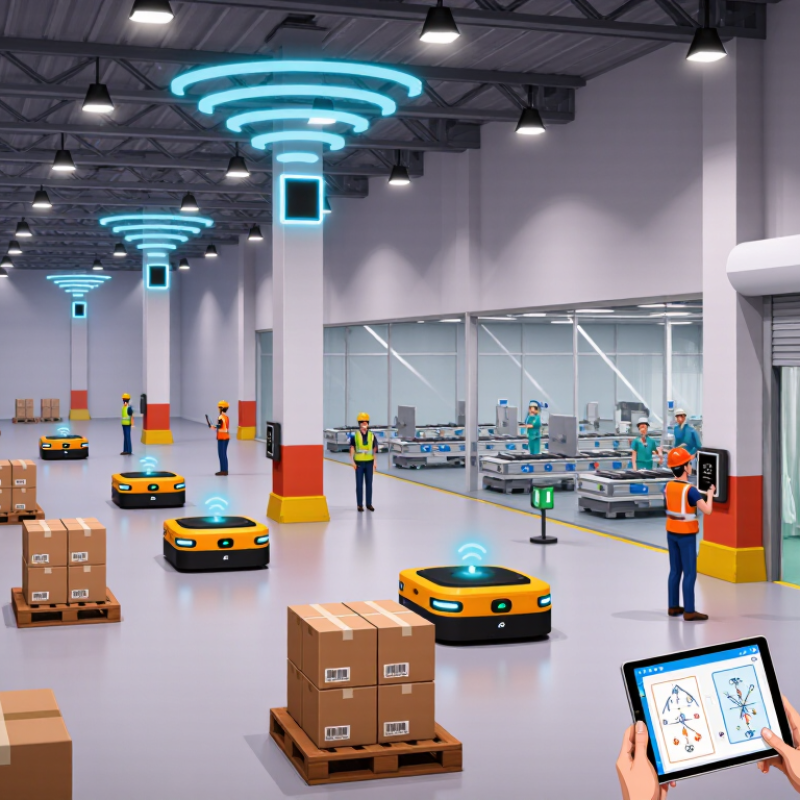
Picture a worker’s tag moving through a warehouse aisle. Anchors mounted on walls or ceiling receive its pulses, while positioning software calculates a location and updates a screen. Short pulses help distinguish signals in busy radio environments, but performance is not automatic. Metal shelving, blocked paths, anchor placement, and clock synchronization can all affect accuracy. Small details matter.
UWB is useful indoors, where satellite signals are weak or unavailable. Yet a displayed dot is still an estimate, not a perfect view of reality. Testing with people, equipment, and actual site layouts reveals gaps that a clean floor plan may miss. That part takes patience. Different systems also vary in update speed, coverage, and integration effort, so practical trials should guide selection.
How Ultra Wideband Positioning Systems Work
China Best Ultra Wideband Positioning Solutions?
How Ultra Wideband Positioning Systems Work
Ultra wideband positioning estimates a device’s location by measuring the travel time of very short radio pulses. Fixed anchors are installed around a room, warehouse, or worksite. A small tag on a person or asset sends pulses to several anchors, or receives signals from them. The system compares timing data and calculates a position from the anchors’ known locations. Tiny timing differences matter. Radio waves travel about 30 centimeters in one nanosecond, so accurate clocks and careful setup are essential.
Many systems use time of flight or time difference of arrival. In time of flight, the system estimates distance from the signal’s travel time. With several distances, it can calculate where the tag is. Time difference methods compare when anchors receive a pulse. These methods can work well, but metal racks, walls, and moving equipment may block or reflect signals. The displayed position can drift. It is worth admitting that no installation is perfectly clean; a test in the actual space often reveals issues a floor plan misses.
Tips: Place anchors with clear paths between them, spread them around the coverage area, and measure their positions carefully. Test near shelves and doorways, too. Compare readings with known points before relying on location data. Small setup errors add up.
Key Features of China’s UWB Positioning Solutions
China’s UWB positioning solutions are designed for accurate indoor tracking in factories, warehouses, hospitals, and transport facilities. Their key feature is precise distance measurement between tags and fixed anchors. Under suitable conditions, accuracy may reach 10 to 30 centimeters. That result depends on layout, calibration, and signal visibility. During real deployments, technicians often adjust anchor height after observing reflections from metal shelves. Small changes can improve stability.
A typical system uses time-of-flight or time-difference calculations to estimate location. Low latency supports moving forklifts, tools, and workers. UWB signals also perform well in crowded indoor environments. Still, concrete walls, machinery, and dense metal structures can reduce accuracy. Battery life requires attention too. Frequent charging may disrupt daily operations. The technology is powerful, but it is not magic.
Practical solutions usually offer adjustable geofencing, motion alerts, location history, and software interfaces for existing management systems. Data encryption and role-based access can help protect sensitive movement records. Reliable engineering teams should provide site surveys, calibration reports, testing procedures, and maintenance guidance. They should also explain compliance with local radio and data-protection requirements. I would not approve a deployment from specifications alone. On-site testing remains essential, and some performance assumptions may need revision after installation.
Major Industrial Applications and Use Cases
China Best Ultra Wideband Positioning Solutions?
Ultra-wideband positioning is becoming practical across China’s industrial facilities. Its strongest value appears where GPS cannot work reliably. UWB tags can locate workers, tools, vehicles, and materials within enclosed spaces. With calibrated anchors, many systems can achieve decimeter-level accuracy. Actual results depend on layout, installation quality, and signal interference.
In warehouses, positioning helps guide forklifts through busy aisles and reduce collision risks. A dashboard can show a pallet’s location near a loading gate or storage zone. In manufacturing plants, workers can find mobile equipment faster. Production managers can also review movement paths and identify repeated delays. This creates useful evidence, not just attractive screen displays. Still, poorly placed anchors may produce confusing location data.
Construction sites and underground operations present different challenges. UWB can mark restricted areas, monitor equipment proximity, and support emergency roll calls. Hospitals and laboratories may use tags to track carts, portable devices, and temperature-sensitive containers. The technology works best when connected with clear operating procedures. Hardware alone cannot fix weak safety training or incomplete records.
Metal structures, dust, walls, and changing layouts can reduce accuracy. Battery replacement also becomes an overlooked maintenance task. Privacy needs attention when tracking employees. Data access should follow local regulations and transparent workplace policies. In my experience, pilot testing one production zone is wiser than covering an entire site immediately. Measure missed detections, installation effort, and staff acceptance before expanding. Progress may be slower, but the findings are more trustworthy.
How to Evaluate and Select a UWB Positioning Provider
China Best Ultra Wideband Positioning Solutions?
How to Evaluate and Select a UWB Positioning Provider
Choosing a UWB positioning provider should begin with the actual worksite, not a sales brochure. Walk through warehouses, hospitals, or factories and record walls, metal racks, moving vehicles, and signal obstacles. Ask the provider to explain expected accuracy in each area. A claim of ten-centimeter accuracy may only apply under controlled conditions. Real operations are less tidy.
Technical experience matters. Review the provider’s deployment records, engineering team, and testing methods. Request a live demonstration with tags, anchors, and location dashboards. Measure latency while equipment moves between rooms. Check whether the system supports common industrial protocols and offers a clear API. Data protection, access controls, and local compliance should be documented, not promised casually. Ask who handles calibration, maintenance, and software updates after installation.
Cost needs a wider lens. Compare hardware, installation, batteries, training, licenses, and support over three years. A low quotation can hide expensive calibration work. Speak with reference users, but inspect their conditions carefully. Their buildings may differ from yours. A limited pilot is sensible, although it can create false confidence if tested during quiet hours. Our assumptions may be wrong. Keep testing with real workers, blocked pathways, and changing layouts before making a full commitment.
How to Evaluate and Select a UWB Positioning Provider
UWB positioning solutions should be evaluated across accuracy, scalability, deployment effort, interoperability, reliability, and total cost. The suggested weights below provide a practical framework for comparing providers without relying on brand-specific performance claims.

 Cosmetic Packaging
 Display Packaging
 CBD Packaging
 Retail Packaging
 Product Packaging
 Cigarette Packaging
 Candle Packaging
 Soap Packaging
 Chocolate Packaging
 Vape Packaging
 Food Packaging
 Window Packaging Boxes
 Gift Packaging
 Bakery Packaging Boxes
 Pizza Packaging
 Bottle Packaging
 Garments Packaging
 Custom Printed Bags
 Christmas Packaging
 Toy Packaging
 Cereal Packaging
 Jewelry Packaging
 Apparel Packaging
 Shipping Packaging
 Custom Pre Roll Boxes
 Dispenser packaging
 Eco Friendly Packaging
 Custom Health Packaging
 Pharmaceutical Packaging


