Cosmetic Packaging
Display Packaging
CBD Packaging
Retail Packaging
Product Packaging
Cigarette Packaging
Candle Packaging
Soap Packaging
Chocolate Packaging
Vape Packaging
Food Packaging
Gift Packaging
Bakery Packaging Boxes
Pizza Packaging
Bottle Packaging
Garments Packaging
Custom Printed Bags
Christmas Packaging
Toy Packaging
Cereal Packaging
Jewelry Packaging
Apparel Packaging
Shipping Packaging
Custom Pre Roll Boxes
Dispenser packaging
Eco Friendly Packaging
Custom Health Packaging
Pharmaceutical PackagingChina has become a major sourcing base for flexible intermediate bulk containers, especially customized baffle bags. According to Grand View Research, the global FIBC market was valued at approximately USD 6.4 billion in 2023. The same report expects steady growth through 2030, supported by agriculture, chemicals, food ingredients, and construction materials. Demand is real. So is the need for better verification.
An Odm Baffle Bag Fibc supplier must do more than offer a low quotation. It should understand filling height, discharge design, liner compatibility, lifting-loop strength, and pallet stability. Baffle panels can help a filled bag keep a compact square shape. That matters inside a shipping container. It can also reduce wasted warehouse space. However, baffles do not automatically improve safety. Fabric weight, seam quality, coating performance, and testing still decide the result. Small details matter.
Ian Dent, a former FIBCA executive director and FIBC industry specialist, has emphasized a practical principle: “The bag must be designed around the product and its handling system.” That sentence deserves attention. A factory may show clean samples, yet production consistency can still vary. Buyers should request batch records, test certificates, stitching inspections, and traceable raw-material information. Smithers’ FIBC market analysis also identifies sustainability, automation, and stronger performance requirements as important industry directions. China’s best ODM manufacturers are not simply bag producers. They are engineering partners. Still, “best” is never permanent. It must be proven through repeat orders, realistic testing, and transparent communication.
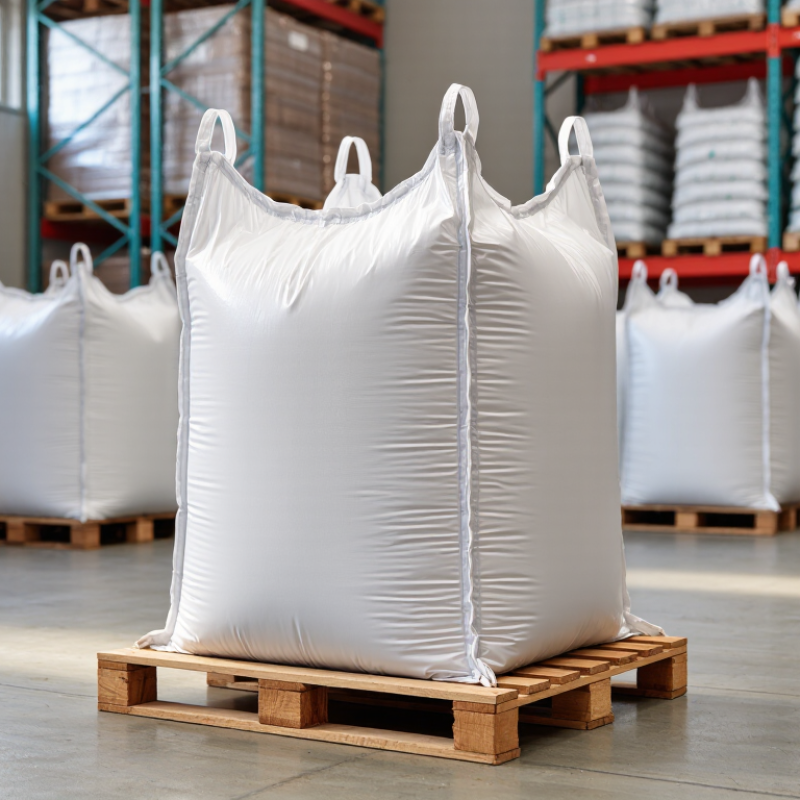
A baffle bag FIBC is a flexible intermediate bulk container with internal fabric panels sewn between its outer walls. These panels control expansion during filling. The bag keeps a squarer shape than a conventional bulk bag.
This design improves storage efficiency in warehouses, trucks, and shipping containers. When powder or granules enter the bag, pressure pushes against the walls. The baffles limit outward movement and distribute that pressure across the panels. As a result, the filled bag becomes more stable and easier to stack. It also leaves fewer unused spaces between neighboring bags.
Design details matter. Baffle width, panel spacing, fabric strength, and stitching patterns must match the filling weight and material flow. A discharge spout can support cleaner unloading, while coated fabric may help manage moisture exposure. In practical production, technicians should inspect seam density, lifting-loop alignment, and bag dimensions before shipment. Small errors can affect stacking performance.
A square shape is useful.
However, baffles do not solve every handling problem. Overfilling can still deform the container. Sharp particles may damage unsuitable fabric. Some projects also underestimate the effect of filling speed on final dimensions. Prototype testing with the actual material is wiser than relying only on drawings. Reliable ODM production depends on clear specifications, controlled sewing, documented inspections, and honest communication about design limits.
China has become a leading ODM baffle bag FIBC manufacturing hub because its supply chain is unusually concentrated. Polypropylene resin, tape extrusion, circular weaving, coating, sewing, printing, and testing can operate within one industrial region. This reduces transfer time and makes design changes easier. A buyer can adjust inlet dimensions, discharge spouts, fabric weight, or liner structure without rebuilding the entire sourcing network.
Industry reports support this scale. Grand View Research estimates that the global flexible intermediate bulk container market will continue expanding through 2030, driven by agriculture, chemicals, food ingredients, and construction materials. UN Comtrade data for HS 6305 also places China among the world’s major exporters of sacks and bags. These figures do not isolate every baffle FIBC, but they show the strength of China’s broader woven-packaging base. That distinction matters.
Experienced Chinese ODM factories often use automated looms, digital cutting systems, and load-testing equipment. They can produce four-panel and multi-panel baffle designs with more stable filling shapes and better warehouse utilization. Many facilities also work against ISO 21898 requirements and provide batch records, tensile results, and safety-factor documentation. Yet quality is not automatic. Inconsistent stitching, weak corner seams, or unclear material traceability can still appear, especially when specifications are rushed. Global buyers should audit samples, verify test methods, and compare production batches before approving volume orders. The cheapest quotation is rarely the most reliable one.
Evaluating a Chinese ODM baffle bag FIBC manufacturer starts with evidence, not catalog photos. Grand View Research valued the global FIBC market at about USD 6.4 billion in 2023. It also forecasts steady growth through 2030. This expansion attracts capable factories and inexperienced traders. Ask for business licenses, production records, export references, and recent test reports. Do not accept edited images as proof.
A reliable ODM partner should translate your cargo conditions into fabric, coating, safety factor, dimensions, loops, and discharge design. Request technical drawings before approving samples. Check ISO 21898 test coverage, including top lift, drop, stacking, seam strength, and UV resistance. For food applications, verify material declarations and contamination controls. Independent laboratory testing matters. Factory testing alone may be insufficient.
Audit the production line where possible. Observe circular looms, lamination, baffle insertion, sewing, inspection, and packaging. Confirm batch traceability from polypropylene resin to finished bags. The Smithers report, The Future of Flexible Intermediate Bulk Containers to 2028, identifies food, chemical, and construction demand as important market drivers. That does not guarantee quality. A clean showroom can hide weak seam control. Request a pilot order with defined acceptance limits, dimensional checks, and load testing. I would keep one failed sample for review; failures often reveal assumptions that polished documents conceal. Evaluation is never perfect. Keep questioning.
Global buyers need more than a standard baffle bag. They need a dependable FIBC design for storage, transport, and local handling conditions. An experienced ODM manufacturer can adjust bag dimensions, lifting loops, fabric weight, and safe working load. Baffle panels improve shape retention and warehouse efficiency. They also require accurate stitching and controlled measurements.
Customization can include coated or uncoated fabric, inner liners, filling spouts, discharge spouts, dust-proof seams, and document pockets. Printing may support handling instructions, batch details, and recycling guidance. For sensitive materials, buyers should discuss antistatic features and suitable liner materials. Food-contact applications require destination-specific documentation and testing.
Tips: Share product density, filling method, discharge equipment, pallet size, and shipping route before sampling. Ask for test reports, production records, and a clear inspection plan. Small details matter. A perfect drawing can still fail if the filling nozzle does not match the factory line. This is a common oversight. Trial bags should be tested under realistic lifting, stacking, and loading conditions. Reliable suppliers should explain material choices, tolerance limits, and quality controls without hiding uncertainty. A thoughtful review may reveal that the cheapest design needs stronger fabric, better seams, or simpler handling hardware.
For global buyers, a reliable baffle bag FIBC supplier must control every production stage, not only the final appearance. In daily ODM production, inspectors check fabric weight, coating strength, seam density, and loop alignment. Each batch should carry a traceable code. This connects raw materials, sewing records, laboratory results, and packing details. Small issues matter. A loose thread can become a serious handling risk.
Export compliance also protects supply reliability. The manufacturer should confirm product specifications, packaging marks, shipping documents, and destination requirements before loading. Testing may include lifting performance, drop resistance, ultraviolet exposure, and safe working load verification. Clear inspection records help buyers review evidence instead of trusting attractive samples. Still, no factory process is perfect. A missed label or delayed test can create avoidable pressure, so internal reviews should remain honest and regular.
Tips: Request a pre-shipment inspection report. Check whether samples match mass production. Confirm dimensions, fabric type, liner details, and loading instructions in writing. Ask for photographs of palletizing and container loading. Keep one approved sample for comparison. These simple steps reduce misunderstandings, although they cannot replace professional inspection. Reliable supply is built through repeated checks, transparent communication, and the willingness to correct weak points before shipment.
How quality control and export compliance support a reliable FIBC supply
Common FIBC specifications use a 5:1 safety factor for single-trip bags and a 6:1 safety factor for reusable bags. Each production lot should be supported by documented load testing, dimensional checks, seam inspection, material verification, and export documents such as the commercial invoice, packing list, bill of lading, certificate of origin, and applicable test certificates.
© 2007 - 2025 The Custom Packaging. All right reserved.