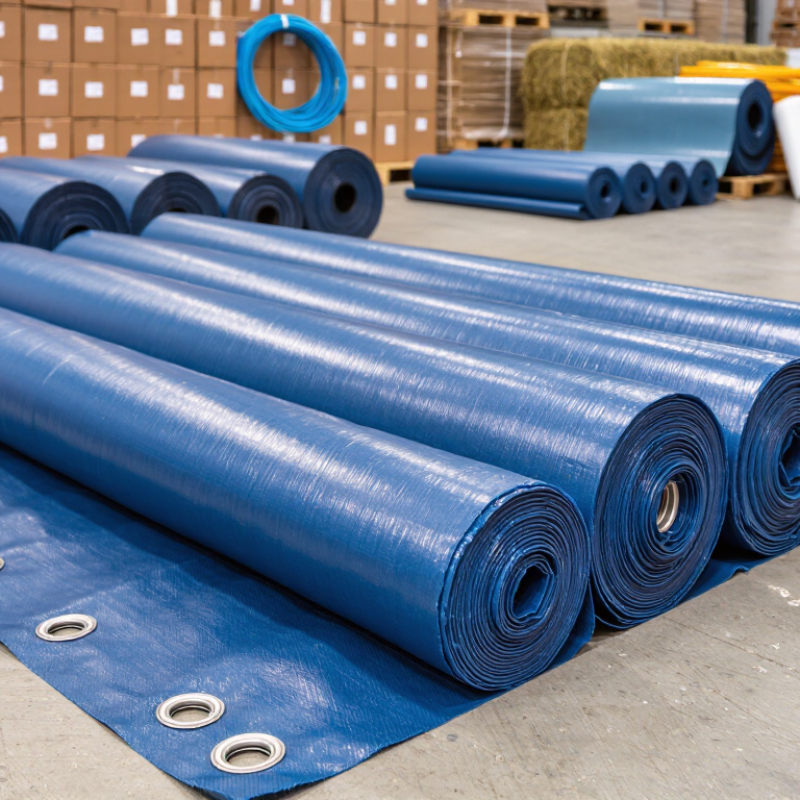
China Best PE Waterproof Tarp Manufacturers and Suppliers

China’s PE waterproof tarp market serves construction sites, farms, transport operators, and emergency storage needs. Buyers often compare more than price. A roll’s weight, weave density, lamination, seam strength, and UV resistance affect how it performs outdoors. Small details matter. A poorly sealed edge can let rain reach stacked goods, while weak eyelets may tear under uneven tension.

Plastics Europe’s Plastics—the Fast Facts 2024 report estimates global plastics production at 413.8 million tonnes in 2023. That figure covers plastics broadly, not tarpaulins alone, so it should not be mistaken for a PE waterproof tarp market-size estimate. For technical context, Andrew J. Peacock, author of Handbook of Polyethylene, examines how polyethylene structure and processing shape material properties. His work supports a practical buying principle: assess the finished fabric, not just the resin name. No single specification guarantees long service.

This guide introduces China Best PE Waterproof Tarp Manufacturers and Suppliers, with attention to product construction, quality checks, customization, and supplier communication. Ask for measurable details, such as fabric weight, coating thickness, tensile performance, and available test records. Request a sample. Inspect its corners and seams after handling. Supplier claims still need checking; product names can sound similar while specifications differ. A clear comparison helps buyers choose a Pe Waterproof Tarp suited to its actual exposure, load, and storage conditions.

China Best PE Waterproof Tarp Manufacturers and Suppliers

Understanding PE Waterproof Tarpaulins and Their Core Materials

Understanding PE Waterproof Tarpaulins and Their Core Materials

PE waterproof tarpaulins usually combine woven HDPE tapes with LDPE or LLDPE coatings. HDPE provides tensile strength, while the coating blocks rain and reduces moisture penetration. The fabric often includes UV stabilizers, pigments, and heat-sealed seams. These details matter more than thickness alone. A heavy tarp can still fail at weak edges or poorly sealed corners.

PlasticsEurope’s Plastics—The Fast Facts 2023 reports global plastics production of 400.3 million tonnes in 2022. Polyethylene remains one of the most widely used polymer families in flexible products.

The OECD Global Plastics Outlook recorded 353 million tonnes of plastic waste in 2019. This data makes material efficiency important, not just product price.

Recycled PE can reduce virgin resin demand, but inconsistent feedstock may affect tear strength and surface uniformity. I have seen buyers overtrust GSM ratings. That is a common mistake.

Tips:

Check fabric weight, tape density, coating thickness, seam construction, and UV resistance together. Ask for test results based on recognized methods, such as tensile and tear testing under ISO 527 or ASTM standards. Store tarpaulins dry and away from sharp edges. No tarp lasts forever. Even excellent PE weakens under continuous sunlight, folding stress, and standing water. Suppliers should explain these limits clearly, because honest specifications are more reliable than perfect-sounding claims.

How Chinese Manufacturers Produce and Test PE Tarps

China Best PE Waterproof Tarp Manufacturers and Suppliers

How Chinese Manufacturers Produce and Test PE Tarps

Chinese PE tarp production usually begins with polyethylene resin, color masterbatch, and UV stabilizers. The materials are mixed, melted, and extruded into flat yarns. These yarns are woven into a dense fabric on high-speed looms. Experienced factories then apply laminated PE film to both surfaces. Heat and pressure must remain stable. Otherwise, pinholes, weak edges, or uneven gloss may appear.

Quality teams measure fabric weight, thickness, tensile strength, and tear resistance. They often reference ISO 1421 for tensile testing and ISO 4892-3 for accelerated UV exposure. Seam strength is checked after thermal welding. Waterproof performance is examined through hydrostatic pressure or controlled water-spray tests. A practical inspection also checks eyelet spacing, folding marks, and coating adhesion. Small details matter.

Environmental durability cannot be treated as a marketing claim. The OECD Global Plastics Outlook reported 353 million tonnes of plastic waste worldwide in 2019. This figure increases pressure to produce longer-lasting sheets and reduce premature replacement. Some manufacturers conduct UV testing for several hundred hours, yet laboratory exposure cannot fully copy wind, dust, and seasonal sunlight. Real weather is messier. Test records should show sample size, exposure time, failure limits, and corrective actions. A clean report is useful, but it is not perfect evidence. Factories still need production audits and random third-party verification.

Key Features of China’s Leading PE Tarp Suppliers

China Best PE Waterproof Tarp Manufacturers and Suppliers

Key Features of China’s Leading PE Tarp Suppliers

Reliable PE tarp suppliers usually begin with stable polyethylene materials, not attractive catalog photos. Buyers should request fabric weight, coating thickness, and waterproof test results. Consistent material matters. It reduces weak spots, pinholes, and early cracking during outdoor use.

Leading suppliers often provide reinforced edges, rust-resistant eyelets, and strong heat-sealed seams. A well-made tarp should resist rain, wind, and repeated folding. Check corner patches carefully; they often reveal production quality. Some manufacturers support custom sizes, colors, printing, and packaging for different markets. Clear technical drawings can prevent costly misunderstandings.

Quality control should cover raw materials, weaving density, sealing strength, and final appearance. Suppliers with documented inspections are easier to evaluate. Ask for sample testing before placing a large order. A sample may look excellent, yet bulk production can vary. That risk deserves attention.

Communication is another important feature. Experienced suppliers confirm dimensions, tolerances, delivery schedules, and packing details in writing. They should also explain suitable applications instead of promising universal performance. No supplier is perfect. Even a durable tarp may fail when overloaded, dragged across sharp surfaces, or stored while wet. Practical guidance, responsive service, and traceable production records make a supplier more dependable.

Typical PE Waterproof Tarp Fabric Weight by Application

Representative industry ranges for polyethylene tarpaulins, shown as midpoint values in grams per square metre (GSM).

Higher fabric weight generally provides greater durability, tear resistance, and suitability for prolonged outdoor use. Actual performance also depends on polyethylene grade, woven scrim construction, lamination, UV stabilisation, and seam quality.

How to Compare Manufacturers, Specifications, and Certifications

When comparing China’s PE waterproof tarp manufacturers, start with measurable specifications, not catalog photographs. A 2024 global tarpaulin market report identifies durability, weather resistance, and customized sizing as major purchasing factors. Ask for GSM, fabric density, coating thickness, tensile strength, tear strength, and hydrostatic pressure. These figures reveal more than the word “heavy-duty.”

Request recent laboratory reports for UV aging, waterproofing, and seam strength. ASTM D751 and ISO 1421 are useful references for coated fabrics and tensile performance. Confirm whether tests cover the finished tarp, rather than only the woven base cloth. This detail matters. A small sample can hide weak eyelets, uneven heat sealing, or brittle corners. I would compare identical samples after folding, wetting, and several days of sunlight exposure. It is not a perfect laboratory method, but it exposes practical weaknesses.

Certifications also require careful checking. The ISO Survey 2022 recorded 1,265,216 ISO 9001 certificates worldwide, yet certification alone does not guarantee reliable production. Verify the certificate number, scope, issuing body, and validity date. For environmental controls, ISO 14001 evidence can support factory evaluation. Request batch traceability, raw-material records, inspection plans, and a corrective-action report. Compare these documents with production samples and pre-shipment inspection results. A lower quotation may reduce fabric weight or coating thickness. Sometimes, specifications are simply unclear. That uncertainty deserves a written answer before payment.

Common Applications and Customization Options for PE Tarps

PE tarps serve many practical purposes in construction, farming, transport, and outdoor storage.

They cover sand, timber, machinery, hay, and temporary work areas. Water runs off quickly when the sheet is installed with a slight slope. Strong eyelets help secure the tarp during windy conditions. However, poor tension can still cause tearing around the edges.

Customization usually begins with size, weight, color, and fabric structure.

Lightweight tarps suit short-term covers, while heavier laminated tarps handle repeated outdoor use. Buyers can request heat-sealed seams, reinforced hems, extra eyelets, corner patches, or printed identification. UV resistance is useful for long exposure to sunlight.

Different projects may also require specific packaging, folding, or roll lengths. Measure the covered area carefully. A few extra centimeters can prevent frustrating gaps.

Experienced Chinese manufacturers and suppliers should explain the polyethylene grade, fabric density, coating method, and expected service conditions.

Ask for samples before approving large production. Check seam strength, eyelet spacing, surface coating, and water resistance through practical testing. A laboratory report is helpful, but it does not replace physical inspection.

Not every thick tarp performs equally well; poor lamination can shorten its life. This detail is easy to overlook.

A first sample may still need adjustment after handling, folding, or outdoor exposure. Reliable suppliers document these changes and confirm the final specification in writing.