Cosmetic Packaging
Display Packaging
CBD Packaging
Retail Packaging
Product Packaging
Cigarette Packaging
Candle Packaging
Soap Packaging
Chocolate Packaging
Vape Packaging
Food Packaging
Gift Packaging
Bakery Packaging Boxes
Pizza Packaging
Bottle Packaging
Garments Packaging
Custom Printed Bags
Christmas Packaging
Toy Packaging
Cereal Packaging
Jewelry Packaging
Apparel Packaging
Shipping Packaging
Custom Pre Roll Boxes
Dispenser packaging
Eco Friendly Packaging
Custom Health Packaging
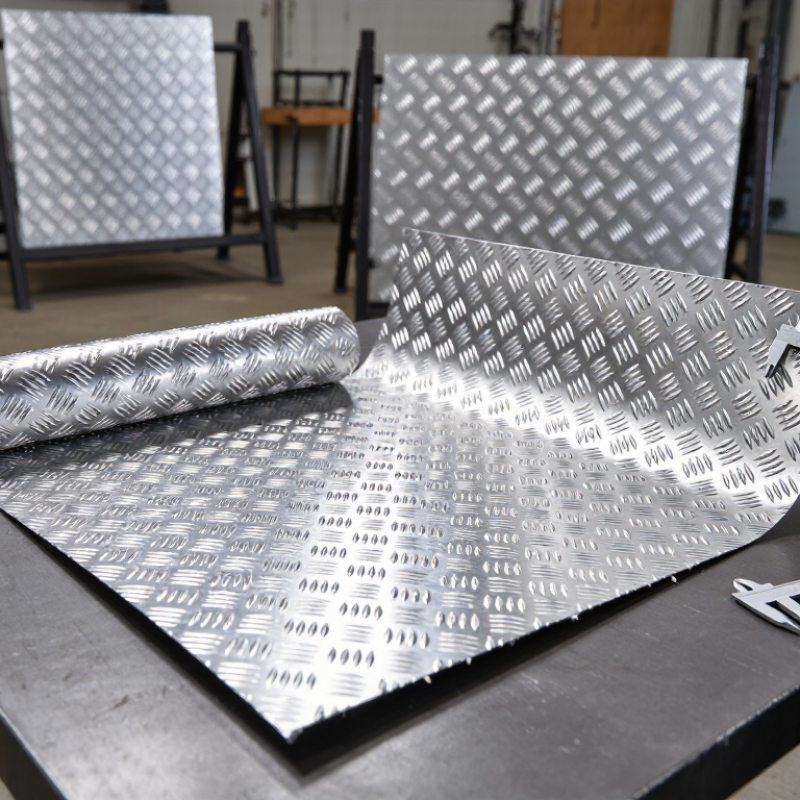
Pharmaceutical PackagingChoosing the right Embossed Aluminum Sheet can influence safety, appearance, cost, and installation time. The raised pattern may improve traction, but it also affects cleaning, bending, cutting, and material use. A sheet that looks ideal in a showroom may perform poorly in a busy workshop or outdoor walkway.
Start with the project’s real conditions. Measure the expected load, foot traffic, moisture exposure, temperature changes, and available support spacing. Check the alloy, thickness, temper, and embossed pattern. For example, a 3 mm sheet may suit a protected wall panel, while a heavier floor application may require stronger support beneath it. Pattern height also matters. Deep diamonds can provide useful grip, yet they may collect dirt around machinery or entrances.
Details matter.
Experienced fabricators usually request a sample before ordering a full batch. Hold it under direct light, inspect the corners, and test a small cut if possible. Confirm flatness, dimensional tolerance, surface finish, and protective packaging with the supplier. Ask for material documentation and production consistency, especially when several sheets must match. Trusted manufacturers should explain their recommendations rather than simply promote the thickest option.
Small mistakes are expensive. I have seen projects focus on shine and overlook drainage, edge protection, or fastener compatibility. That lesson deserves attention. This guide explains how to compare technical requirements, visual expectations, supplier reliability, and long-term maintenance before selecting an Embossed Aluminum Sheet for your project.
How to Choose Embossed Aluminum Sheet for Your Project?
ASTM B209 is a useful starting point for selecting aluminum sheet and plate. Its scope covers rolled aluminum and aluminum-alloy products, including alloy, temper, dimensions, and specified testing. It does not decide whether a diamond pattern suits your floor, wall, or equipment panel. That decision depends on real service conditions.
Define the load before comparing patterns. A pedestrian walkway may need different thickness than a platform carrying pallet trucks. Note static weight, impact, span, and support spacing. Embossing can improve surface traction, but it does not automatically provide enough structural strength. Check the actual base thickness, not only the overall patterned height. Small errors here can become expensive.
Environment controls service life. Record moisture, salt, cleaning chemicals, temperature, and contact with other metals. A wet processing room may require careful drainage and corrosion review. Coastal exposure deserves extra attention. Specify the alloy and temper under the ASTM B209 framework, then request dimensional checks and material certification. Confirm how thickness is measured. This detail is often overlooked. It should not be.
Allow for fabrication, too. Bending, drilling, welding, and edge finishing can change the practical result. A sheet that meets the standard may still perform poorly after unsuitable forming. Review the supplier’s test data against your drawings and maintenance plan. Your first selection may be wrong. Recheck it against the harshest day, not the average one.
How to Choose Embossed Aluminum Sheet for Your Project?
Choosing the alloy and temper is more important than the surface pattern alone. For light-duty panels, 3003-H22 offers a practical balance of formability, corrosion resistance, and cost. Its yield strength is approximately 110 MPa, although the actual value can vary with sheet thickness and supply standards. It works well for wall panels, decorative covers, and equipment surfaces with gentle shaping.
Choose 5052-H32 when the panel needs greater strength and dent resistance. Its yield strength is about 193 MPa, making it suitable for vehicle floors, walkways, tool compartments, and outdoor enclosures. However, stronger aluminum may require more forming force. Tight bends can also show cracking if the radius is too small. The embossed pattern can complicate bending, so test a sample first. A mistake I often see is selecting by alloy name alone. Temper and thickness matter just as much.
Tips: Compare certified mechanical data for your exact thickness. Check the pattern depth before calculating fit. Use a trial bend near the sheet edge. Inspect both the crest and valley after forming. If the application carries repeated loads, request engineering review. Do not assume a higher yield value solves every design problem; fatigue, support spacing, and fastener pressure still need attention.
| Selection Dimension | 3003-H22 Embossed Aluminum Sheet | 5052-H32 Embossed Aluminum Sheet | Project Selection Guidance |
|---|---|---|---|
| Primary Alloy | Aluminum-manganese alloy, commonly selected for general-purpose forming and moderate-duty applications. | Aluminum-magnesium alloy, commonly selected where higher strength and improved resistance to marine atmospheres are required. | Choose 3003 for easier forming and general service; choose 5052 for higher structural capability. |
| Temper | H22: strain-hardened and partially annealed. | H32: strain-hardened and stabilized to a quarter-hard condition. | Temper affects strength, bendability, and forming force. Confirm the required temper with the fabricator. |
| Approximate Yield Strength | ≈110 MPa | ≈193 MPa | Use 5052-H32 when the embossed panel must resist higher permanent deformation or service loads. |
| Typical Tensile Strength Range | Approximately 145–185 MPa | Approximately 210–260 MPa | Actual values depend on sheet thickness, applicable specification, and test direction. |
| Typical Elongation | Approximately 8–12% | Approximately 10–16% | Both alloys can be formed, but tooling clearance and bend radius should be checked after embossing. |
| Nominal Density | Approximately 2.73 g/cm³ | Approximately 2.68 g/cm³ | Both provide a lightweight alternative to steel; 5052 is slightly lighter by volume. |
| Typical Thermal Conductivity | Approximately 193 W/m·K at room temperature | Approximately 138 W/m·K at room temperature | 3003 is generally preferred when heat spreading is an important design consideration. |
| Corrosion Resistance | Good resistance in normal atmospheric and mildly corrosive environments. | Very good resistance, including stronger performance in humid and marine environments. | Select 5052 for outdoor, coastal, wet-room, or salt-exposure applications when corrosion resistance is a priority. |
| Formability | Very good general formability; suitable for many shallow-to-moderate formed patterns. | Good formability, although higher strength can require greater forming force and more careful bend design. | Select 3003 when complex forming, low tooling force, or a tighter forming process is more important than maximum strength. |
| Weldability | Generally weldable using common aluminum welding processes; welding may reduce local strength. | Generally weldable using common aluminum welding processes; welded zones may have reduced strength. | Use a qualified welding procedure and account for heat-affected areas in load-bearing designs. |
| Typical Embossed Applications | Decorative wall panels, ceiling panels, interior cladding, light-duty covers, trim, and general sheet-metal components. | Vehicle and trailer panels, exterior cladding, marine-related components, heavy-duty covers, flooring panels, and equipment enclosures. | Match the alloy to the expected load, exposure conditions, embossing depth, and installation method. |
| Relative Material Cost | Often lower than 5052-H32 for comparable sheet dimensions, subject to thickness and market conditions. | Often higher than 3003-H22 because of alloying content and higher strength requirements. | Compare total project cost, including forming, support structure, finishing, fasteners, and service life. |
| Best General Choice | Cost-effective, formable, general-purpose embossed sheet. | Higher-strength, corrosion-resistant embossed sheet. | For a final specification, verify alloy, temper, thickness, embossing pattern, and mechanical requirements against the governing material standard. |
| Reference values are typical engineering figures and may vary with sheet thickness, product standard, test method, and supplier certification. Do not use the table as a substitute for a certified material datasheet or structural design calculation. | |||
How to Choose Embossed Aluminum Sheet for Your Project?
Choosing embossed aluminum sheet begins with separating material density from surface design. Common aluminum alloys approach 2.70 g/cm³, but exact values vary with composition. Embossing does not compress the metal into a new density. It changes the surface profile, volume, weight distribution, and usable thickness. Confirm alloy data through a mill certificate or laboratory test before setting specifications. Small variations matter in lightweight panels. Especially across large areas.
Set the base sheet thickness before selecting the pattern. A 1.0 mm sheet with a 0.2 mm raised profile does not behave like a flat 1.2 mm sheet. The raised geometry improves stiffness, but it changes measured height and exposed area. Use pattern pitch, crest height, valley depth, and coverage in your calculation. For a target near 2.70 g/cm³, calculate density as mass divided by true material volume, not envelope volume. Weigh a marked sample, measure its dimensions, and exclude coating weight.
A practical inspection plan should compare three samples from different sheet locations. Check thickness at valleys and crests separately. Record mass per square meter, pattern depth, and flatness after cutting. A common mistake is approving nominal gauge while ignoring valley thinning. It can reduce forming strength and create uneven joints. I would also question whether 2.70 g/cm³ describes the alloy or the completed assembly. That distinction prevents costly rework. Testing remains necessary.
Choosing embossed aluminum sheet starts with the EN 485-2 mechanical property table, not surface appearance. Check the alloy, temper, thickness, tensile strength, proof stress, and elongation. These values show how the sheet may behave during cutting, bending, and service. A stronger temper can resist dents better, but it may crack around sharp embossed peaks. Formability matters here.
Embossing changes local strain and can reduce the safe bending area. Review the rolling direction before forming panels. In practical trials, use the planned tool radius and inspect the first pieces under bright light. Small splits often appear beside the pattern, not across its center. Compare elongation data with the real sheet thickness. Data alone can mislead. EN 485-2 supports a consistent mechanical comparison, but it does not replace a project-specific forming test.
Tips: Ask for a test certificate linked to the production lot. Compare tensile strength, proof stress, and elongation in one table. Request corrosion information for the intended environment, such as humidity, salt exposure, or contact with dissimilar metals. EN 485-2 should be checked alongside suitable corrosion test data, because alloy choice, coating, drainage, and installation details all affect service life. Leave a small design allowance. Embossed patterns are rarely perfectly uniform. Review rejected samples honestly, then adjust the radius, temper, or thickness before full production.
How to Choose Embossed Aluminum Sheet for Your Project?
An embossed aluminum sheet can look suitable online and still fail on site. Before ordering, inspect the finish under bright, angled light. Check whether the pattern is even, sharp, and free from dull patches. A coarse tread may hide scratches, but it can collect dirt around raised edges. Ask for a physical sample, not only a digital image. Screen colors can mislead.
Slip resistance deserves practical testing. Request the supplier’s tested value and the method used to obtain it. Dry-surface results may not represent a wet walkway, oily workshop, or dusty loading area. Match the pattern depth to the actual footwear and traffic. Deeper embossing is not automatically safer. It may create cleaning problems or uncomfortable footing. A small test panel can reveal more than a polished specification sheet.
Fabrication compatibility is equally important. Confirm the alloy and temper before cutting, bending, drilling, or welding. A sheet that bends neatly may crack near a deep pattern or distorted edge. Measure the usable flat area, because embossing can affect clamping and hole alignment. Leave trial material for the first cut. This costs a little more, but rushed ordering costs more. I have seen projects focus on appearance and overlook edge finishing. That mistake is easy to repeat. Ask about burr control, protective film, and storage conditions before approving the final quantity.
Theoretical aluminum mass by nominal sheet thickness. Use thickness to check handling, support requirements, fabrication limits, and total project weight before ordering.
Values are calculated from aluminum density of approximately 2.70 g/cm³: mass per square metre = thickness × 2.70. Embossing may add a small amount of material, so confirm the supplier’s actual weight. Also verify the required finish, wet and dry slip resistance, and compatibility with cutting, bending, drilling, and joining processes.
© 2007 - 2025 The Custom Packaging. All right reserved.