Top 10 Types of Biodegradable Pouches for Global Buyers
Global buyers are rethinking flexible packaging as waste volumes rise and regulations become stricter. The OECD’s Global Plastics Outlook reports that global plastic waste reached 353 million tonnes in 2019, while only 9% was recycled. These figures expose a practical gap between packaging demand and waste-management capacity.
This guide introduces the Top 10 Types of Biodegradable Pouches for Global Buyers. It examines compostable film pouches, starch-based bags, cellulose pouches, PLA-lined formats, and other emerging structures. Each option carries different strengths. Barrier performance, sealing temperature, moisture resistance, shelf life, and disposal infrastructure can change the buying decision. A coffee pouch may need strong oxygen protection, while a produce pouch may prioritize breathability and certified compostability.
The label matters. But it is not a guarantee.
Industry research from Smithers highlights continued growth in sustainable flexible packaging, driven by brand commitments, retailer standards, and evolving environmental policies. However, biodegradable packaging should not be judged by appearance alone. Buyers must review material composition, certification, industrial composting requirements, and supplier testing records. ASTM D6400, EN 13432, and BPI certification can provide useful verification, but availability differs across markets.
Biodegrade Pouches may reduce environmental pressure in suitable systems, yet no pouch solves every waste problem. Some products need controlled composting facilities that many regions still lack. That limitation deserves honest attention. This overview therefore compares material choices through a professional, application-based lens, helping importers and packaging teams assess performance, compliance, cost, and real end-of-life conditions before placing large international orders.
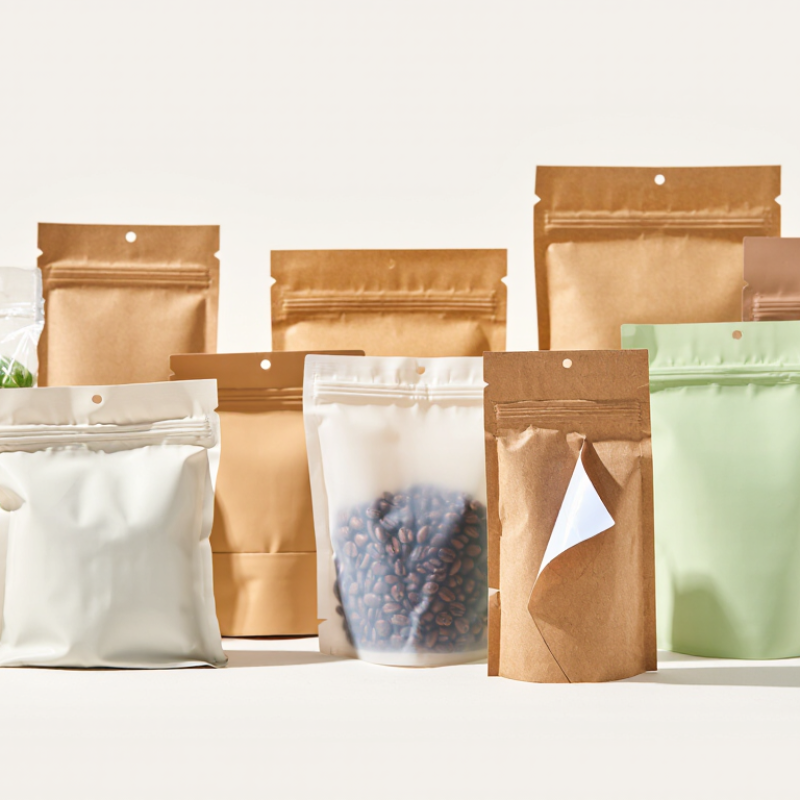
What Biodegradable Pouches Are and How They Are Classified
Biodegradable pouches are flexible packages designed to break down through biological activity under defined conditions. They may use plant-based polymers, natural fibers, or compostable blends. “Biodegradable” is not a universal performance claim. Temperature, moisture, oxygen, and microorganisms all affect decomposition.
For global buyers, classification usually follows material, structure, and disposal route. Common types include PLA pouches, starch-based pouches, cellulose film pouches, PHA pouches, PBS pouches, and PBAT-blend pouches. Other options include paper-laminated pouches, algae-based pouches, chitosan-coated pouches, and molded-fiber pouches. Each type has different strength, sealing behavior, moisture resistance, and shelf-life performance. Some require industrial composting. Others may degrade in controlled soil environments, but not in ordinary landfill conditions.
Material selection should begin with the product, not the marketing label. Dry snacks may need strong oxygen protection, while fresh goods require moisture control and reliable seals. Buyers should request test reports, compostability certificates, migration data, and clear disposal instructions. Confirm the exact packaging structure, because one thin plastic layer can change the entire end-of-life pathway. Small details matter. A pouch may look sustainable yet fail during transport or storage. In my experience, performance claims are often too broad, and real-world disposal remains the weakest link. Specification review should include local facilities, climate, logistics, and expected use time.
Biodegradable pouches are flexible packages made from materials that can break down through biological activity under defined environmental conditions. They are commonly classified by their main film or laminate material. The chart compares representative layer counts in common pouch structures; actual construction varies by product requirements, barrier performance, and certification.
Ten Main Types of Biodegradable Pouches by Material and Structure
Top 10 Types of Biodegradable Pouches for Global Buyers
Biodegradable pouches vary by material, barrier performance, and physical structure. PLA flat pouches suit dry goods with moderate moisture sensitivity. Cellulose film pouches offer a paper-like appearance and useful breathability. Starch-based pouches can work for lightweight products, but humidity may weaken them. PBAT and PLA blend pouches provide better flexibility and heat sealing. PBS-based pouches are another option for buyers seeking compostable film with improved toughness.
PHA film pouches use bio-based polymers and may support selected composting conditions. Paper-cellulose laminate pouches combine a printable outer layer with a compostable inner film. Compostable high-barrier zipper pouches protect products needing stronger oxygen and moisture resistance. Spouted biodegradable pouches support liquids, sauces, or refill formats. Compostable vacuum pouches use tighter structures for products requiring reduced air exposure. The category is not perfectly tidy.
Structure changes practical performance. Flat pouches save storage space, while stand-up pouches use a bottom gusset for shelf display. Three-side-seal designs are economical. Four-side-seal formats can improve shape control. Zippers add convenience, but they may complicate compostability. Buyers should check seal strength, drop resistance, and oxygen transmission data. A pouch may pass a laboratory test yet perform poorly during shipping. This deserves honest review. Compostable claims also depend on certified materials, local facilities, temperature, moisture, and disposal instructions. Supplier samples should face real humidity, filling, sealing, and transport trials before large-scale purchasing.
Key Applications Across Food, Retail, Agriculture, and Personal Care
Top 10 Types of Biodegradable Pouches for Global Buyers
Biodegradable pouches now serve food, retail, agriculture, and personal care markets. Common options include cellulose film, starch-based film, PLA, PBS, PBAT blends, molded fiber, coated paper, compostable laminate, bio-based polyethylene, and water-soluble film. Each type performs differently. Cellulose suits dry snacks and tea. Starch films work well for lightweight packaging. Coated paper supports retail items needing a natural appearance. For moist foods, multilayer compostable structures may offer better sealing, though recycling systems often cannot process them.
Agricultural buyers use pouches for seeds, soil additives, and small-dose products. Personal care companies choose them for bath salts, powders, wipes, and refill formats. Retail applications include clothing accessories, small hardware, and promotional kits. Food packaging needs careful testing for oxygen, moisture, heat, and grease resistance. A pouch that feels strong in a warehouse may weaken near humidity. That detail is easy to miss. Compostability also depends on certified materials and suitable facilities, not only the word “biodegradable.”
Tips: Ask for barrier, seal-strength, and shelf-life test data. Check whether the pouch needs industrial or home composting conditions. Request migration documentation for food contact. Compare the full material structure, not just the front film. Start with a small production trial. Real handling often reveals problems that samples hide. Confirm local disposal guidance before making environmental claims.
Performance Factors: Barrier Protection, Durability, and Compostability
Top 10 Types of Biodegradable Pouches for Global Buyers
Biodegradable pouches include starch films, cellulose laminates, PLA, PHA, PBAT blends, and paper-based structures. Each type behaves differently under heat, humidity, and transport pressure. Barrier protection remains the first screening point. Oxygen transmission rate and water vapor transmission rate should be tested on the finished pouch, not only on the raw film. A pouch can pass one laboratory test and fail during a humid warehouse trial.
For dry foods, a cellulose or coated paper pouch may provide suitable oxygen protection, but moisture resistance needs careful validation. Compostable multilayer structures can improve durability, although difficult-to-separate layers may reduce practical compostability. Smithers’ Future of Sustainable Packaging to 2028 identifies barrier performance and end-of-life systems as major development priorities. That finding matters for global buyers, because local composting access varies sharply between markets.
Durability also requires drop, seal-strength, puncture, and compression testing. Weak seals waste materials quickly. They also damage buyer confidence. European Bioplastics reported global bioplastics production capacity at about 2.18 million tonnes in 2023, with projected capacity near 7.43 million tonnes by 2028. Growth is substantial, but capacity does not guarantee consistent pouch quality. Buyers should request ASTM D6400 or EN 13432 evidence where relevant, plus product-specific compostability results. Industrially compostable is not home compostable. That distinction is often overlooked.
How Global Buyers Evaluate Suppliers, Certifications, and Custom Options
Global buyers often compare ten biodegradable pouch formats: stand-up, flat, three-side-seal, side-gusseted, quad-seal, zipper, spouted, sachet, vacuum, and rollstock pouches. Each format suits different products, filling lines, and shipping conditions. A spouted pouch may serve liquids, while a vacuum pouch protects products from air. Practical testing matters more than attractive samples. Ask for seal strength, puncture resistance, shelf-life data, and performance after transport.
Supplier evaluation should begin with traceable evidence. Request material specifications, batch records, safety data, and independent laboratory reports. Certifications such as EN 13432, ASTM D6400, or ISO 17088 may support compostability claims, but their relevance depends on the target market and disposal system. Do not accept “eco-friendly” as proof. Check whether the certificate covers the complete pouch, including inks, adhesives, valves, and zippers. Audit manufacturing controls, complaint procedures, and production capacity. Small details reveal reliability.
Customization includes pouch dimensions, barrier layers, closure types, printing, and perforation. However, every added feature can affect recyclability, compostability, cost, or filling speed. Suppliers should provide digital drawings, pre-production samples, and clear tolerance ranges. Confirm minimum order quantities, tooling charges, lead times, and storage conditions in writing. I have found that rushed approvals create avoidable waste. A promising sample can still fail on an automated line. Buyers should test filled pouches under heat, compression, moisture, and real distribution conditions before approving mass production.

 Cosmetic Packaging
 Display Packaging
 CBD Packaging
 Retail Packaging
 Product Packaging
 Cigarette Packaging
 Candle Packaging
 Soap Packaging
 Chocolate Packaging
 Vape Packaging
 Food Packaging
 Window Packaging Boxes
 Gift Packaging
 Bakery Packaging Boxes
 Pizza Packaging
 Bottle Packaging
 Garments Packaging
 Custom Printed Bags
 Christmas Packaging
 Toy Packaging
 Cereal Packaging
 Jewelry Packaging
 Apparel Packaging
 Shipping Packaging
 Custom Pre Roll Boxes
 Dispenser packaging
 Eco Friendly Packaging
 Custom Health Packaging
 Pharmaceutical Packaging


