2026 Top Mud Pump Pulsation Dampener Types Which One?
Choosing the right Mud Pump Pulsation Dampener in 2026 requires more than comparing catalog pressure ratings. It requires understanding flow behavior, drilling conditions, maintenance records, and pressure spikes at the standpipe. A small error can appear as vibration, gauge fluctuation, damaged valves, or unstable drilling performance.
Recent IEA Oil 2024 analysis projects global oil demand to approach 105 million barrels per day before 2030. Baker Hughes rig-count data also shows continuing drilling activity across several regions. These indicators support demand for dependable pressure-control equipment, although they do not measure dampener sales directly. That limitation matters. Global market estimates often mix complete mud pumps, spare parts, and pulsation accessories.
API Standard 674 provides a useful framework for reciprocating-pump design, including pressure pulsation and mechanical reliability considerations. In practical field work, diaphragm, bladder, and air-chamber designs each present different trade-offs. Diaphragm units may offer robust separation. Bladder models can respond quickly. Air chambers may provide simpler operation, but gas management cannot be ignored.
Dr. Robert F. Mitchell, a respected drilling-engineering author, emphasizes a principle that fits this decision: “A drilling system must be understood as a complete system, not isolated equipment.” That view is especially relevant here. Dampener selection depends on mud density, pump stroke rate, discharge pressure, gas precharge, and expected temperature.
The best choice is not always the most expensive one.
It is the one that remains stable under real operating conditions.
Some specifications still look convincing on paper. Field evidence may disagree. This guide compares the leading 2026 Mud Pump Pulsation Dampener types, their operating strengths, practical weaknesses, and selection risks.
What Is a Mud Pump Pulsation Dampener?
2026 Top Mud Pump Pulsation Dampener Types: Which One?
What Is a Mud Pump Pulsation Dampener?
A mud pump pulsation dampener is a pressure control vessel installed near the discharge line. It reduces pressure spikes created by the pump’s reciprocating pistons. Inside, compressed gas stores energy during high-pressure strokes. It releases that energy between strokes. The result is a steadier flow, lower vibration, and less stress on valves, pipes, and instruments.
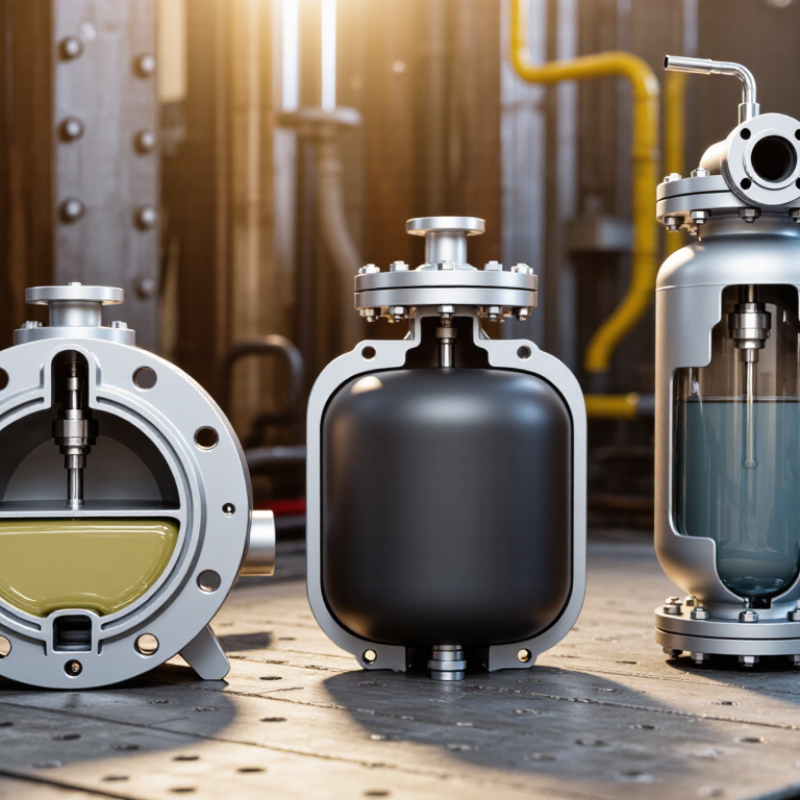
Common designs include bladder, diaphragm, and air-chamber dampeners. Bladder models separate gas from drilling fluid and respond quickly. Diaphragm models use a flexible barrier and can suit demanding circulation systems. Air-chamber designs are simpler, but mud contamination can reduce their performance. The correct choice depends on pump rate, discharge pressure, fluid density, temperature, and available maintenance support. Field technicians should inspect precharge pressure, shell condition, connections, and sealing parts. A small leak can create a large pressure problem.
Tips: Match the dampener volume to the pump’s stroke rate. Check precharge only with safe, approved equipment. Record readings during inspections. Do not copy settings from another rig without verification. A perfect selection is rare. Actual operating conditions may expose weaknesses that calculations miss. Reviewing vibration trends and pressure data can improve the next decision.
How Mud Pump Pulsation Dampeners Work
2026 Top Mud Pump Pulsation Dampener Types: Which One?
How Mud Pump Pulsation Dampeners Work
A mud pump pulsation dampener smooths pressure changes before drilling fluid reaches the surface system. Most designs use a gas-charged chamber and a flexible bladder or diaphragm. The chamber stores energy when discharge pressure rises. It releases that energy when pressure drops. This action reduces vibration, hose movement, and stress on valves, fittings, and instruments.
During operation, the pump sends fluid through the discharge manifold in repeated strokes. Pressure does not remain constant. A correctly precharged dampener absorbs the sharp peaks between strokes. The gas pressure must match the pump’s operating range and fluid conditions. Too little precharge allows excessive movement. Too much can limit fluid absorption. Small details matter here.
In field inspections, I check pressure records, mounting bolts, fluid leaks, and unusual knocking sounds. A bladder type often suits applications needing compact maintenance access. A diaphragm type can provide reliable separation when abrasive drilling fluid is present. Some piston designs handle demanding pressure cycles, but sealing wear requires close attention. Selection is not only about maximum pressure. Pump speed, mud density, temperature, available space, and maintenance skill also influence the choice. I have seen calculations appear correct while poor precharge settings caused unstable discharge pressure. That mistake is easy to repeat. Safety procedures and the manufacturer’s technical data should guide testing, charging, and replacement intervals.
Main Types of Mud Pump Pulsation Dampeners
The main types of mud pump pulsation dampeners are bladder, diaphragm, and air-chamber designs. Each controls discharge-pressure surges differently. Bladder dampeners use a precharged gas pocket inside an elastomeric bladder. They respond quickly and suit high-pressure triplex pumps. Diaphragm units separate gas and drilling fluid with a flexible membrane. They can tolerate certain fluid conditions, but membrane fatigue needs close inspection. Air-chamber dampeners are simpler and often less expensive. Their performance can change as gas dissolves into the mud.
API Specification 7K remains a key reference for drilling and well-servicing equipment. Its pressure-control requirements reinforce the need for rated vessels, documented testing, and protective devices. SPE field papers also connect stable pump pressure with better measurement quality and fewer vibration-related problems. That matters when flow rates exceed 1,000 gallons per minute. Small pressure spikes become costly at that scale.
In practice, selection depends on mud density, discharge pressure, temperature, and maintenance access. A bladder model may be ideal for frequent pressure changes. A diaphragm model may offer better separation in difficult fluid service. Air chambers can work well on simpler rigs, but operators must monitor gas charge and pressure response. Real-world performance is not always perfect. Precharge settings are often treated as fixed, although mud temperature and wear can shift results. Reviewing pressure logs before replacement is wiser than choosing by vessel size alone.
How to Compare Dampener Performance and Reliability
2026 Top Mud Pump Pulsation Dampener Types: Which One?
Comparing dampener performance requires more than checking rated pressure. Bladder, diaphragm, and air-chamber designs respond differently to rapid pressure changes. Field studies commonly report pulsation reductions of 70–90% when dampeners are correctly sized and precharged. However, those figures depend on pump speed, fluid density, valve condition, and installation quality.
Bladder dampeners usually provide fast response and straightforward maintenance. Diaphragm units can tolerate some abrasive service, but diaphragm fatigue needs close inspection. Air chambers have simple construction, yet their performance may drift as gas dissolves into the drilling fluid. API Specification 7K emphasizes pressure integrity, hydrostatic testing, inspection, and documented maintenance for pressure-containing equipment. The IADC Drilling Manual also stresses monitoring pressure behavior rather than trusting nameplate ratings alone. Watch the gauge.
A practical comparison should record pressure amplitude, discharge flow variation, precharge loss, temperature, and service hours. A 10% pressure ripple may look acceptable, but repeated peaks can accelerate liner, valve, and pipe fatigue. Use at least 24 hours of operating data when possible. Check readings at different strokes per minute. One test is not enough. Reliability also depends on seal quality, access for servicing, spare-part availability, and correct gas charging procedures. The weak point is often installation, not design. Operators should compare lifecycle records, not only purchase prices. Sources: API Specification 7K and IADC Drilling Manual.
Which Pulsation Dampener Fits Your Drilling Application?
2026 Top Mud Pump Pulsation Dampener Types: Which One?
Which pulsation dampener fits your drilling application? The answer depends on pressure, mud chemistry, temperature, and pump geometry. Bladder dampeners suit many high-pressure discharge systems because gas compressibility absorbs rapid pressure peaks. Diaphragm designs can be useful with abrasive or chemically aggressive fluids. Piston dampeners handle severe service, but they usually require closer inspection and more moving parts.
Start with the numbers. API Spec 7K requires pressure-containing drilling equipment to match rated working pressure, test pressure, and service conditions. SPE technical case studies commonly report 10–20% lower pressure ripple after correct dampener sizing and precharge. That result is not guaranteed. Poor precharge can make the vessel ineffective, or even increase vibration.
For a 7,500-psi mud pump, check the complete pressure path, not only the dampener nameplate. Confirm maximum discharge pressure, mud density, pulsation frequency, gas compatibility, and temperature. IADC drilling guidance also stresses routine inspection of charging systems and pressure gauges. A practical field check is simple: record discharge pressure near the fluid end, then compare readings before and after installation. Watch the gauge needle. It should move less violently.
Fit matters more than popularity. A compact bladder unit may work well on a land rig with clean water-based mud, while a diaphragm or piston design may better tolerate solids, heat, or frequent pressure changes. My own caution is blunt: catalog pressure ratings do not replace application calculations. A dampener can be correctly installed and still be incorrectly selected.

 Cosmetic Packaging
 Display Packaging
 CBD Packaging
 Retail Packaging
 Product Packaging
 Cigarette Packaging
 Candle Packaging
 Soap Packaging
 Chocolate Packaging
 Vape Packaging
 Food Packaging
 Window Packaging Boxes
 Gift Packaging
 Bakery Packaging Boxes
 Pizza Packaging
 Bottle Packaging
 Garments Packaging
 Custom Printed Bags
 Christmas Packaging
 Toy Packaging
 Cereal Packaging
 Jewelry Packaging
 Apparel Packaging
 Shipping Packaging
 Custom Pre Roll Boxes
 Dispenser packaging
 Eco Friendly Packaging
 Custom Health Packaging
 Pharmaceutical Packaging


