What Are the Top Outdoor Floor Types for 2026?
Choosing an Outdoor Floor for 2026 means balancing comfort, appearance, maintenance, and local weather. A surface that feels cool beneath bare feet may become slippery after rain. Dark pavers can hold heat through a long summer afternoon. Small details matter.
This guide explores leading options, including porcelain pavers, natural stone, concrete, composite decking, and traditional wood. Each has practical strengths, but no material suits every yard. Porcelain offers a clean, consistent finish and is easy to wipe down, while natural stone brings varied textures that can look striking beside garden beds. Concrete can be durable and flexible in design, though poor drainage or rushed installation may leave problems that show later. Composite boards reduce routine upkeep, but their color and surface temperature deserve a close look before purchase. Wood feels warm and familiar. It also needs regular care.
A good choice starts with the site, not a trend. Consider whether the area is covered, how water drains, and who will use it. Check manufacturer guidance for slip resistance, installation, and cleaning, then compare samples outdoors in changing light. A sample can reveal more than a catalog image. Even careful planning has limits: shade shifts, weather varies, and budgets can change. The sections ahead compare these floor types in practical terms, so readers can narrow their choices with clearer expectations.
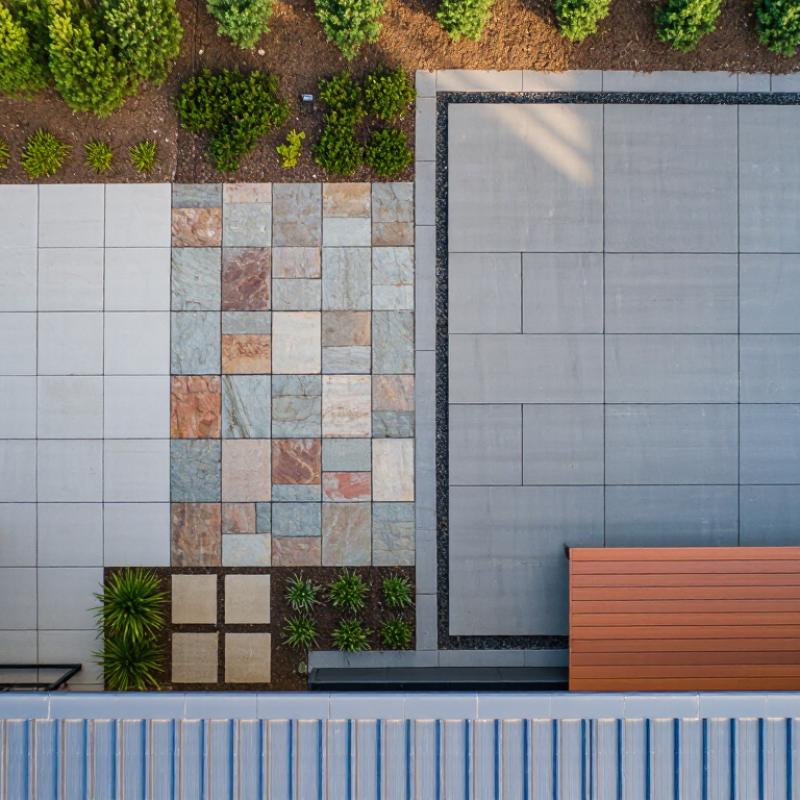
What Outdoor Flooring Is and Where It Is Used
Outdoor flooring is a surface made for open-air areas, where it faces rain, sunlight, temperature changes, and regular foot traffic. It can include boards, pavers, tiles, gravel, or poured surfaces. The right type depends on the setting, not just appearance. A shaded balcony has different needs from a sunny poolside path. Think about drainage, grip when wet, and how much upkeep you can manage.
You’ll find outdoor flooring on patios, balconies, decks, garden paths, courtyards, and around pools. On a small balcony, lightweight tiles can create a neat walking surface without crowding the space. Garden paths often use firm pavers to keep shoes out of mud. Pool areas need a stable surface that drains well and feels comfortable under bare feet. These details matter. A surface that looks perfect in a photo may become slippery or hot in daily use.
Tips: Check the slope and drainage before installation. Place a sample outside for several days and notice how it feels after rain and direct sun. Measure the area twice. It sounds fussy, but uneven edges are hard to ignore later. Also consider nearby doors, furniture legs, and the path people actually walk. A little planning helps; still, no material stays maintenance-free forever.
What Are the Top Outdoor Floor Types for 2026?
Typical service-life estimates for common outdoor flooring materials. Actual lifespan varies with climate, installation, maintenance, and product quality.
Which Factors Shape Outdoor Flooring Performance
What Are the Top Outdoor Floor Types for 2026?
Which Factors Shape Outdoor Flooring Performance
Outdoor flooring succeeds or fails at the surface. Sun exposure, standing water, freeze-thaw cycles, and foot traffic all affect how materials age. The U.S. Environmental Protection Agency reports that urban areas can be 1–7°F warmer by day than nearby areas. Dark paving may therefore feel uncomfortable under bare feet on a sunny patio. Shade helps, but it does not fix poor drainage. After rain, water should move away rather than collect in joints or low spots.
Slip resistance needs context. ANSI A326.3 sets a wet dynamic coefficient of friction of at least 0.42 for certain level interior spaces; that figure is not a guarantee of outdoor safety. Ask for test results relevant to the intended conditions, including wet use. For tile, the Tile Council of North America’s guidance emphasizes selecting products for their exposure and installation conditions. Frost-prone sites also need suitable tile, compatible setting materials, and well-drained assemblies. Details matter.
Maintenance and installation shape long-term performance as much as material choice. Porcelain, concrete pavers, natural stone, and treated wood each respond differently to heat, moisture, and cleaning. Check the substrate, slope, joint design, and local climate before choosing. A sample can look cool in a showroom and scorch in afternoon sun. That part is easy to overlook. Test a sample outdoors, inspect it after rain, and consider how often you will clean or reseal it.
The Leading Outdoor Floor Types for 2026
For 2026, leading outdoor floor types balance weather resistance, comfort, and upkeep. Porcelain pavers suit patios exposed to rain and frequent cleaning. Their dense surface resists stains, while textured finishes improve grip when wet. Check the slip rating before choosing. A smooth sample can feel very different after a shower.
Composite decking remains a practical option for raised decks and busy family spaces. It avoids some routine sealing, though boards can heat up in strong sun. Leave room for airflow beneath the deck, and follow the installation guidance for spacing. Small mistakes there can lead to drainage problems later.
Natural stone brings varied colors and tactile detail to garden paths and terraces. It may need periodic sealing, and some stones become slippery or fade unevenly. Permeable pavers are useful where rainwater needs to drain through the surface. Gravel offers another permeable choice, but it can shift under chairs and shoes. No surface is perfect. Compare samples outdoors, where sunlight, dust, and damp conditions reveal differences that indoor displays often hide.
What Are the Top Outdoor Floor Types for 2026? — The Leading Outdoor Floor Types for 2026
A practical comparison of popular outdoor flooring options for patios, decks, paths, and poolside areas.
How Outdoor Flooring Materials Compare
What Are the Top Outdoor Floor Types for 2026?
How Outdoor Flooring Materials Compare
Outdoor flooring is a trade-off between grip, drainage, upkeep, and comfort underfoot. Porcelain pavers resist staining and need little sealing, but their joints still require careful drainage. The Tile Council of North America’s ANSI A137.1 standard classifies porcelain tile as having water absorption of 0.5% or less. That low absorption can help in wet, freeze-prone settings; it does not guarantee a slip-resistant surface. Check the product’s tested wet traction, not just its finish. Smooth tile can be unforgiving after rain.
Concrete is durable and works well for large patios, though it may crack as ground conditions shift. Broom-finished or textured surfaces can improve footing, while pale colors may feel cooler in direct sun. Natural stone offers varied texture and appearance, but porosity and sealing needs differ by stone. Some pieces also vary in thickness, making installation more demanding.
Composite decking avoids some routine staining and splinter concerns, yet can heat up in full sun and may expand with temperature changes. Pressure-treated wood often costs less initially and feels less hard underfoot, but it needs regular cleaning and finish maintenance. A small sample tells you more than a catalogue photo. Set it outside, wet it, and step on it; this simple test is easy to overlook.
How to Choose the Right Outdoor Floor for Your Space
What Are the Top Outdoor Floor Types for 2026?
How to Choose the Right Outdoor Floor for Your Space
The right outdoor floor depends less on trends than on how you use the space. For a busy patio, porcelain pavers resist stains and clean easily, but they can feel hard underfoot. Composite boards suit decks where bare feet and quick rinsing matter. Natural stone offers texture and character, though some varieties need sealing and can become slippery when wet. No surface is perfect.
Start with the conditions under your feet. Check whether rain drains away or sits near the door, and note how many hours of sun the area gets. A shaded, damp corner may need a grippy surface; a sunny balcony calls for materials that stay comfortable in heat. Bring home samples. Set them outside for several days, then test them with wet shoes and direct sun. It is a small step, but often revealing.
Match upkeep to your real routine, not an ideal one. If you rarely want to scrub, avoid finishes that show every leaf stain. For a family dining area, choose a surface that handles chair movement and dropped food. Also check the base: uneven ground can make even excellent flooring wobble. There may be a trade-off between appearance, comfort, and maintenance, and the best choice is the one you can live with year-round.

 Cosmetic Packaging
 Display Packaging
 CBD Packaging
 Retail Packaging
 Product Packaging
 Cigarette Packaging
 Candle Packaging
 Soap Packaging
 Chocolate Packaging
 Vape Packaging
 Food Packaging
 Window Packaging Boxes
 Gift Packaging
 Bakery Packaging Boxes
 Pizza Packaging
 Bottle Packaging
 Garments Packaging
 Custom Printed Bags
 Christmas Packaging
 Toy Packaging
 Cereal Packaging
 Jewelry Packaging
 Apparel Packaging
 Shipping Packaging
 Custom Pre Roll Boxes
 Dispenser packaging
 Eco Friendly Packaging
 Custom Health Packaging
 Pharmaceutical Packaging


